Film Vehicle Booking Guide for Atlanta Productions
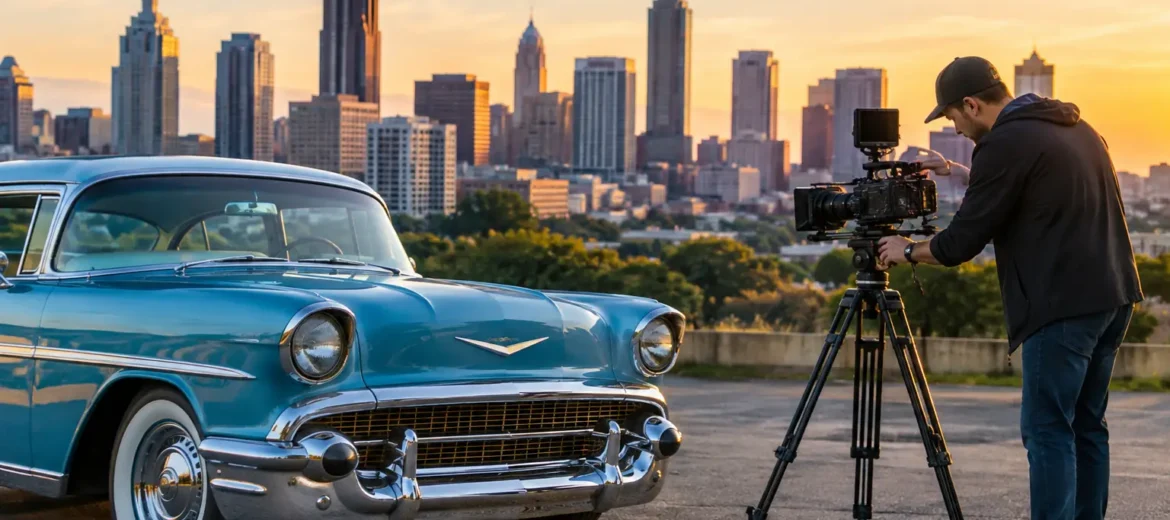
A beautifully chosen automobile can tell the audience more in one frame than a page of dialogue. The right arrival at a Buckhead hotel, a quiet departure from an estate drive, or a sunlit pass through a historic neighborhood can establish era, character, and mood before anyone speaks. This film vehicle booking guide is designed to help production teams choose and coordinate a classic vehicle with the same care given to wardrobe, location, and production design.
For film and commercial work, a heritage automobile is never simply transportation. It is a moving piece of set dressing, a practical element of the shot, and often an unforgettable detail for cast, clients, and crew. Booking well begins with a creative vision, then gives that vision enough operational clarity to work on set.
Start With the Vehicle’s Role in the Story
Before selecting a vehicle, define what it needs to communicate on camera. Is it the elegant car that brings a couple to a gala? Is it a romantic focal point for a proposal scene, a period detail in an editorial campaign, or an iconic backdrop for a luxury brand film? The answer shapes every decision that follows.
A vehicle can be visually striking without being right for the scene. A polished prewar-inspired roadster creates a different emotional note than a stately postwar sedan. One feels open, playful, and cinematic in motion; the other carries a more formal sense of arrival. Consider the silhouette, interior, color, chrome, convertible top, seating arrangement, and the angles from which the vehicle will be photographed.
Think Beyond the Hero Shot
The hero shot may be the reason the car was booked, but production needs often extend beyond it. Ask whether the automobile will appear parked, whether talent will enter or exit, whether the chauffeur will be visible, and whether the scene calls for a controlled arrival or departure. A vehicle that looks perfect in a wide exterior may need different positioning for close details of a door handle, grille, steering wheel, or rear passenger moment.
If movement is part of the sequence, communicate the intended action early. Controlled driving coverage, street access, camera placement, staging time, and the production’s safety plan should all be discussed before the shoot day. A chauffeur-driven classic car brings elegance to the frame while ensuring the vehicle is handled with appropriate care.
Film Vehicle Booking Guide: Build a Clear Creative Brief
The most useful booking request gives the vehicle provider a concise picture of the production rather than a vague request for an old car. It does not need to read like a full treatment. A thoughtful brief simply lets everyone anticipate the visual and logistical needs of the day.
Include these details when making your inquiry:
- Production type, such as feature film, television, commercial, music video, editorial, or branded content
- Shoot date, call time, estimated wrap time, and the amount of time the vehicle is needed on site
- Location or locations, including whether the scene is stationary, in motion, indoors, outdoors, or on private property
- Intended vehicle action, from a still display to talent entry, exit, arrival, departure, or chauffeur-driven movement
- Creative references that show the desired era, mood, wardrobe palette, and camera perspective
It also helps to identify the person who will make real-time decisions on set. Depending on the production, that may be the producer, transportation coordinator, location manager, first assistant director, or art department lead. A single informed contact keeps timing changes from becoming unnecessary confusion.
Choose an Era and Silhouette That Read on Camera
Period accuracy matters when the script demands it, but not every production needs museum-level specificity. Sometimes the goal is simply a feeling: old Hollywood romance, European grand touring, garden-party elegance, or a glamorous American summer. Be honest about which matters more, because the answer may widen or narrow the available choices.
Classic Rides ATL’s collection offers distinct visual personalities for different treatments. A 1928 Ford Model A Phaeton Convertible can bring airy, open-top charm to a daylight scene, while a 1949 Bentley Mark VI carries a composed, formal presence suited to a refined arrival. An Excalibur Phaeton or Mercedes-Benz 540K Roadster replica can create a particularly dramatic profile for luxury editorials, celebration scenes, and stylized campaigns.
Color and finish deserve attention as well. Light paint can glow beautifully in soft sun yet behave differently against a pale building. Dark paint may lend gravity and contrast, especially for evening scenes, but requires thoughtful lighting to preserve body lines on camera. Share location photos and wardrobe direction when possible. The smallest visual collision, such as a vehicle disappearing into the architecture behind it, can change the result.
Give the Schedule Room for Craft
Classic vehicles reward productions that avoid treating them like interchangeable props. A polished image depends on calm staging, clear access, and enough time for the vehicle to arrive, be positioned, and be reset between takes. Build this time into the call sheet rather than asking the automobile and chauffeur to appear at the precise moment cameras roll.
For a multi-location shoot, map the vehicle’s movement in advance. Atlanta’s character can change quickly from the formal streets of Buckhead to the urban geometry of Midtown, the leafy approaches of Brookhaven, or an estate setting in North Georgia. Each location may have a different loading zone, turning radius, traffic pattern, surface condition, and parking arrangement.
The production team should confirm property access, required permits, reserved curb space, and any street-use approvals well before the date. If a shot requires a particular approach or departure, walk through the route on paper first. A few extra minutes of preproduction can protect the rhythm of the shoot when the day is moving quickly.
Plan for Weather and Changing Light
A convertible scene can be magical under clear skies and less practical in sudden rain. An open-top vehicle may be central to the concept, yet productions should still establish a weather decision point and an alternate shot plan. The same is true for golden-hour scenes, when a narrow window of flattering light can create pressure across the entire schedule.
Discuss whether the car must remain camera-ready during a long hold, whether it needs to be moved between setups, and what happens if the shot order changes. This is not about removing spontaneity from the day. It is about preserving the freedom to adapt without compromising the experience or the image.
Coordinate Talent, Wardrobe, and On-Camera Details
A refined vehicle entrance works best when talent has had a moment to rehearse it. Doors, seats, long formalwear, trailing gowns, hats, bouquets, and camera positions all influence how naturally someone enters and exits. For an engagement campaign or cinematic wedding sequence, those few moments may become the photographs or footage everyone remembers.
Consider what the camera will see inside the vehicle, too. Small continuity details can matter: where a jacket is placed, whether a bouquet travels with the talent, how a passenger sits, and whether modern personal items have been cleared from view. If the chauffeur is intended to appear on camera, align wardrobe and blocking in advance so the scene feels deliberate rather than incidental.
For productions with children, multiple cast members, or frequent talent changes, communicate those needs at the start. The right vehicle choice may depend as much on the scene’s choreography as its visual style.
Confirm Expectations Before the Shoot Day
A polished booking conversation should cover timing, location addresses, vehicle use, chauffeur involvement, creative needs, access requirements, and the appropriate production contacts. If the production requires certificates, documentation, additional coordination, or specific site procedures, raise those points early enough to address them thoughtfully.
Be precise about the booking window, but leave sensible room around it. A shoot can run ahead, fall behind, or shift locations because of weather and lighting. Knowing what flexibility is needed allows the experience to be planned with care instead of improvised under pressure.
The most memorable film vehicles do more than fill negative space in a frame. They give a scene its sense of occasion. When your production is ready to place a timeless automobile at the center of the story, request a quote with your creative brief, shoot schedule, and location details, then let the arrival feel as considered as the film itself.